
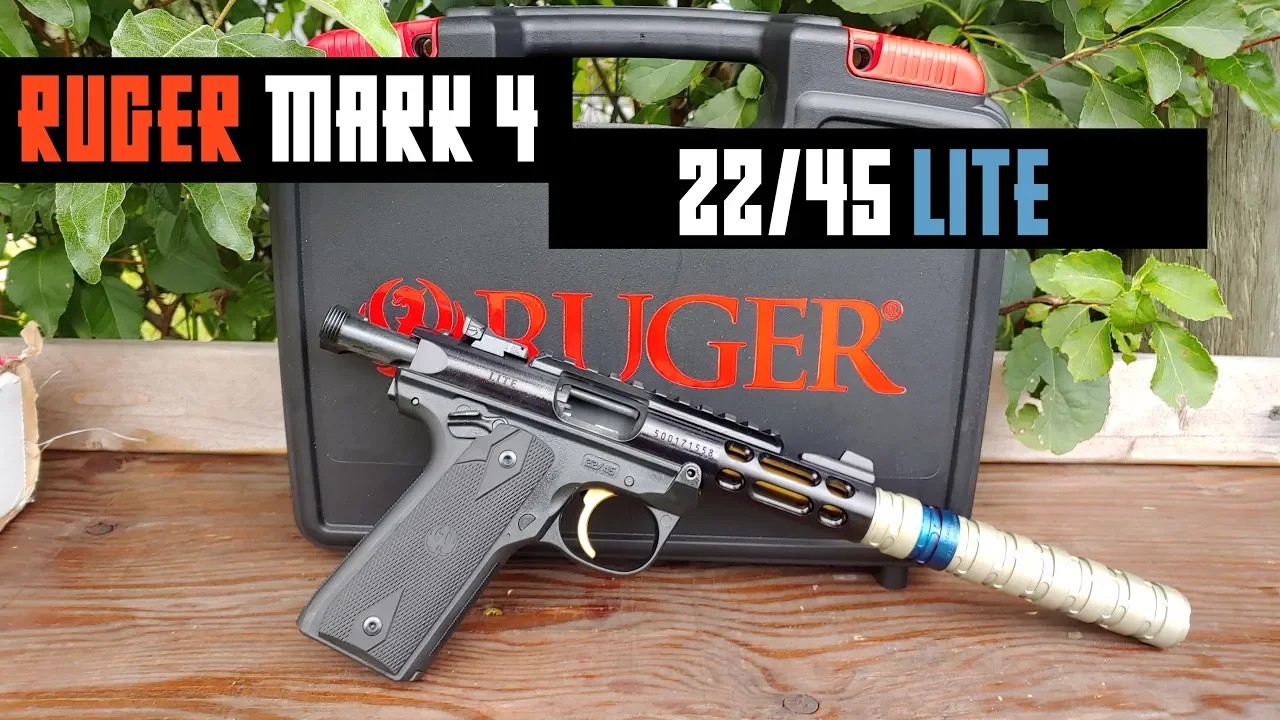
Squat Squad — I firmly believe a .22 Long Rifle pistol is one of the best tools a gun owner can own: cheap to shoot, easy to learn on, and stupid fun. Back when I bought my first handgun (~2008), the main rimfire choices were the Ruger Mark II/III (accurate, but a pain to take apart), the Browning Buck Mark (easier strip, pricier), and the Smith & Wesson 22A (cheap, push-button takedown — what I bought). That whole conversation changed when Ruger launched the Mark IV series. Here’s my deep-dive review of the Ruger Mark IV 22/45 Lite (model 43927 on tape) — features, range time, and who it’s right for. Full detailed review / range T&E from the video, not a booth clip.
Gear I actually use: SlavGuns Amazon. Precision rails & accessories (code SlavGuns on Anarchy-manufactured only): Anarchy Outdoors. Support the channel: join on YouTube.
The Mark IV breakthrough: one-button takedown
Across the Mark IV line, the big innovation is the one-button takedown. Safety on, push the button, lift the upper, pull the bolt — cleaning/maintenance without the old Mark II/III headache that scared off new shooters. Reassemble: drop it in, hook the front, depress the button, done. That alone is why the Mark IV formula matters.
Controls where you expect them
Magazine release sits in a familiar 1911-ish spot; mags are under spring tension and really drop free — seat them fully or they won’t lock. Bolt release on the grip panel is nicely sized; with medium hands I could run it without changing grip much. You can also release the bolt from the rear. Ambidextrous safety can have the right-side lever removed if you don’t want it. Safety pivots on the front (not the rear like a 1911/CZ); white = safe, red = fire.
22/45 Lite: polymer frame + aluminum upper
The 22/45 line swaps the metal grip frame for a polymer precision-molded one with rubbery 1911-style grips plus front/rear checkering. The Lite goes further: ventilated aerospace-grade aluminum upper receiver and a lighter stainless cold hammer-forged barrel. On tape this sample weighed about 25 oz without a suppressor. Model variants differ mainly by upper color, vent pattern, accents, and whether the barrel is threaded (important in mag-/feature-restricted states). Wood-grip distributor exclusives exist; I liked the black/gold horizontal-vent look that matched my Zev OZ9 vibe — model 43927.
Sights, rail, threaded barrel
Black front blade and rear sights adjustable for windage and elevation (no drifting). Factory Picatinny rail for a red dot or optic. This variant’s barrel is 1/2×28 threaded for a suppressor or muzzle device — and yes, I said putting a brake/comp on a .22 is silly. Because the Lite is so light, I recommended a lighter suppressor (on tape: a Q Erector) so the balance doesn’t get nose-heavy. Suppressors are NFA — buy/transfer only where legal and through the correct process.
How it shoots
Two mags in the box with an easy-load button; aftermarket mag loaders help. With a suppressor, hearing protection wasn’t needed on that range day — bowling pins and steel at ~50 yards were easy work. Accurate enough that a red dot would only make steel even more trivial. Trigger: clean but a bit heavy if you’re spoiled by a ~3 lb 1911/CZ competition trigger; for new owners / non-snobs it’s genuinely good, and aftermarket triggers exist. Face of the gun stays clean: Mark IV / .22 LR / Prescott, AZ markings, 22/45 Lite + serial on the other side. Thread protector is a thick textured chunk of metal — appreciated.
Honest gripes: safety & bolt pinch
Safety: If you run a thumbs-forward 1911-style grip and ride the safety high, this front-pivoting, smaller lever feels awkward. Without riding it, it’s easy to nudge the safety up while shooting — happened to me and a friend. An oversized aftermarket safety (or a stiffer safe→fire detent) would help; as-is, safe→fire takes less force than fire→safe.
Bolt / slide release: Releasing from the rear can pinch thumb/finger between the release and the back of the receiver if you grip it wrong. For new shooters, kids, or soft hands, teach the side bolt-release button instead.
Ammo note (as filmed)
Chronograph segment compared CCI subsonic / “suppressor” .22 vs Federal and Winchester bulk HV through the suppressed host. CCI subsonic was clearly quieter; Federal bulk still ran subsonic on several shots (~1000–1070 fps band on tape); Winchester bulk ran hotter (~1100+). Specs and lots vary — verify current ammo before you buy for a quiet host setup.
Bottom line & price framing (as filmed)
Hard to go wrong with a Mark IV if you want an all-around .22 LR pistol — they fixed the old takedown complaint. As filmed: MSRP starting around $410, street around $350 (not the cheapest, but among the best). Spend a little more for a 22/45 Lite: light, good grips, usable irons, optic rail, factory-threaded options, and it looks the part. Comes in a solid plastic case that sells the upmarket feel. Great trainer, plinker, and suppressor host. Street prices move — check current dealer listings.
Keep squatting.
Would you run a Mark IV 22/45 Lite as your rimfire trainer — or stick with a Buck Mark / TX22 / Victory?
Some links are affiliates. Purchases may support the channel at no extra cost to you. Always follow federal, state, and local law. Firearms, ammo, and suppressors ship to eligible buyers only.
Comment here