
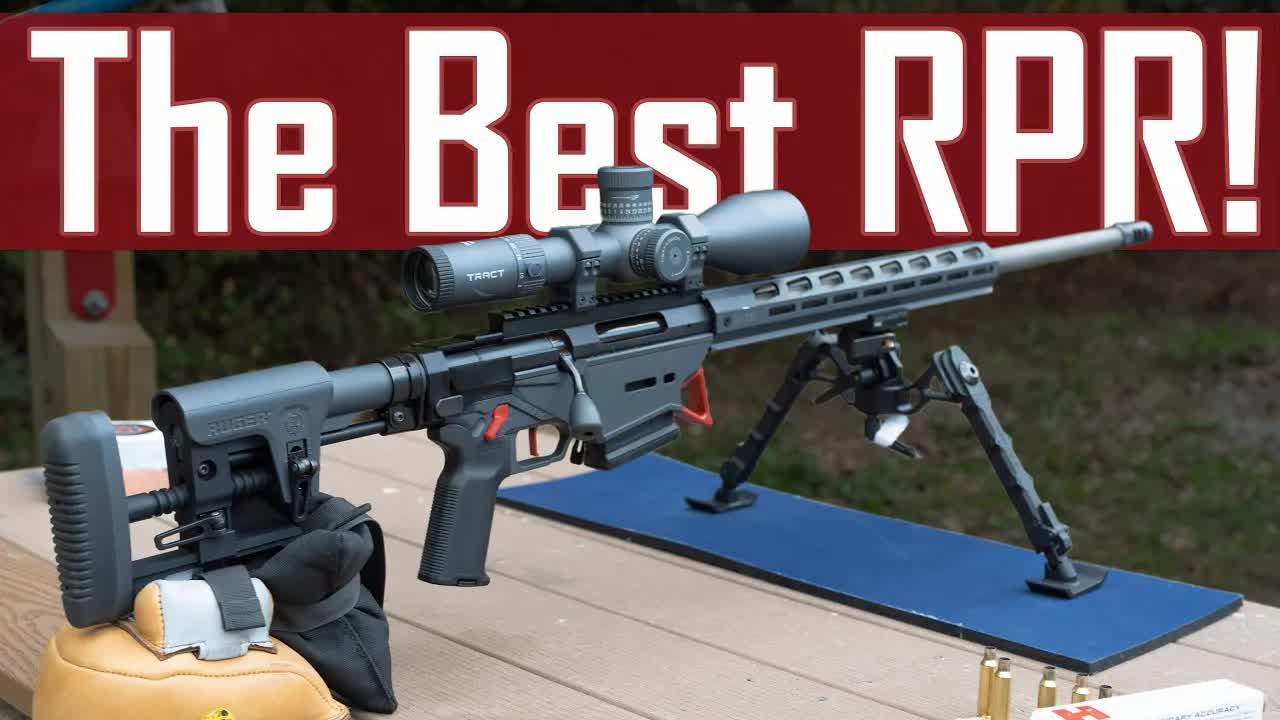
Range T&E / long-term follow-up: feature recap of the Custom Shop Ruger Precision Rifle in 6.5 Creedmoor, groups with a small ammo sample, steel past 700 yards, plus nearly two years of ownership impressions after the factory finally released the SKU. Specs and MSRP are as taped at release — verify current pricing and configs before you buy.
Channel fans and family — this one sat on the shelf longer than any gun I’ve covered. Ruger reached out about the Custom Shop Precision Rifle back in late 2020. I filmed the first deep dive years before the 6.5 Creedmoor model actually hit the street. The 6mm Creedmoor version showed up for PRS production work first; supply-chain reality kept pushing the 6.5. When Instagram finally confirmed the launch, I hit publish on that old footage… and then filmed this nearly two-year follow-up so you could hear whether the gun still puts a smile on my face once the hype cools off.
Gear I actually use: SlavGuns Amazon. Precision accessories & Anarchy parts (code SlavGuns on Anarchy-manufactured only): slav.li/anarchyoutdoors. Support the channel: join on YouTube.
Who this Custom Shop RPR is for
The Custom Shop line is Ruger’s high-end, performance-oriented variants of existing platforms — not a separate company. This RPR was aimed straight at PRS / Precision Rifle Series production division: commercially available rifles with a listed MSRP of $2,500 or less without the optic. That’s the equipment-race ceiling that makes a factory “almost custom” gun viable. Most owners will never run a timed PRS stage — same way most Range Rovers never leave pavement — but the design choices (weight, barrel, brake, barricade stop) still make sense if you want a refined long-range plinker that won’t hold you back out toward 1,200–1,500 yards once you stretch it.
Five big upgrades vs a stock RPR
- 26″ heavy-contour barrel vs the production 6.5 Creedmoor’s 24″ medium contour — more velocity and better heat retention when you’re dumping 10–12 rounds in a minute or two. That profile alone adds more than two pounds versus a stock RPR; in PRS that’s a feature, not a bug (match guns often sit 20–26 lb all-up).
- APA Little Bastard Gen 2 muzzle brake with locking nut — quick on/off for a suppressor or bare muzzle, no crush washer, and in the same effectiveness neighborhood as Area 419 / PVA Jet Blast class brakes. Far ahead of the hybrid brake on a stock RPR. (Suppressor mount talk only if you remove the brake — NFA rules still apply.)
- Flat-bottom ARCA handguard — more surface on barricades, cleaner tripod work without weird clamps, and bipod placement that isn’t locked into one Picatinny hole forever.
- TriggerTech two-stage (field-grade class at the time of filming; TriggerTech said it planned to sell RPR triggers commercially) — light first-stage take-up into a crisp wall, then a clean break. Adjustable roughly 1–2 lb first stage and 1.5–2.5 lb second stage as taped.
- Updated bolt geometry — smoothest Ruger Precision action I’ve run; that little intermediate “step” you feel on stock RPRs / Americans is much less pronounced.
Smaller but welcome: Magpul MOE K2 grip, flared magwell with M-LOK sides for a spare-round holder, front barricade stop, M-LOK flat rail under the stock instead of cheese-grater Pic, gray Cerakote, and red safety to match the trigger blade / stop. Short-action RPRs still feed AICS or AR-10 / SR-25 mags; Ruger includes two 10-round Magpul mags. If you handload, buy AICS — top-loading through AR-10 mags is a pain.
Range: groups and past 700
On camera we stretched steel past 700 yards (range limit that day) with Hornady 6.5 Creedmoor 147 gr ELD Match, using a Ruger-edition Kestrel 5700 for dope behind an MOA-reticle optic (TRACT TORIC ELR glass — separate video promised on tape). Recoil with the Little Bastard was very manageable; the action felt smoother than any other RPR I’d run.
Accuracy sample: Federal 130 gr Berger, plus Hornady ELD Match in 140 and 147. Multiple five-shot groups landed under an inch, with the 147s clearly the best of the three on that day — several clusters touching or nearly same-hole with one small flyer here and there. Mirage and a beeping drone made the last squares entertaining, but the takeaway held: this barrel/ammo combo can shoot.
Two-year verdict
Most guns I T&E are tools. This one actually makes me want to go shoot. Ruger did the barrel and action work in-house where it makes sense, then bought best-in-class for the brake and trigger instead of cheaping out on “not invented here.” Nearly $2,500 MSRP at launch sounds steep until you add up the aftermarket bill to get a stock RPR match-ready — on tape I called out at least ~$900 of included upgrades versus building it yourself. Whether you need every Custom Shop feature is a different question; if you already own a stock RPR and only race once a year, parts might be smarter. If you want a semi-custom factory gun that still smiles after two years on the shelf and at the range, this is the one that did it for me.
Keep squatting.
Would you buy the Custom Shop RPR as-is for PRS production / long-range fun, or build up a stock RPR piece by piece?
Some links are affiliates. Purchases may support the channel at no extra cost to you. Always follow federal, state, and local law. Firearms, ammo, and suppressors ship to eligible buyers only.
Comment here