

Heads up: this is a shop conversation, not range testing. It was filmed at Anarchy Outdoors in Utah with Aaron, and Anarchy makes a lot of the parts we talk about, so keep that in mind.
Squat Squad, this one is a look back to December 14, 2021, when SlavGuns was on tour in Utah. I already wrote up the big-picture best Ruger Precision Rifle upgrades from this same visit. This time I want to come at it from a different direction: Aaron had the rifle that started Anarchy Outdoors, his original Gen 1 RPR, sitting next to a stock Ruger Precision Rifle that was less than a week old and still 100% factory. So what did Ruger actually fix over the years, and what’s still worth changing on a brand-new one?
TL;DR
- Ruger fixed: the flexy Gen 1 handguard, the plastic bolt shroud, and the shroud shape (squared off on newer guns). Aaron said they hadn’t seen the firing pin problems on newer rifles that they saw on older ones.
- Still worth changing on a new one: the AR-style pistol grip, the muzzle brake, the bolt handle and knob, and the trigger, plus a cheek pad.
- Nice to have: a flat bottom with an Arca rail, a different magazine release, and a scope base with more cant than the stock 20 MOA.
- The honest part: the factory rifle with a scope on it will already reach 1,000 yards. The upgrades are about making you more repeatable.
A rifle that was hard to get, even for a shop
A funny side note first. Anarchy has an FFL and, as Aaron put it, the cell number of a VP at Ruger. Ruger had told them design changes were coming and promised them a rifle, but demand was so high that it never showed up. So they ended up driving about 80 miles to buy that new RPR at retail like everyone else. Being well connected doesn’t always mean you’re well connected.
The Gen 1: the gun that started Anarchy Outdoors
Aaron bought his RPR in November 2015, back when it was the gun to buy and hard to find. Put it next to the new one and you can barely tell they’re related. Almost everything except the stock barreled action has been changed. Here’s what bugged him about the Gen 1:
- The handguard. The Gen 1 handguard flexed when you loaded it with a bipod. It felt like it was built for an AR-15, not a precision bolt gun. Ruger fixed that.
- The bolt shroud. The first one was plastic. Newer rifles have a better shroud, and Ruger changed the shape from a long taper to a squared-off design, similar to the Magnum.
- Firing pins. Ruger uses MIM (metal injection molded) parts. It’s a cheaper way to make parts, and they can hide bubbles or weak spots you can’t see. On the older rifles, Aaron said they’d seen the backs of firing pins break. On the newer design they hadn’t seen it after about 3,000 rounds.
His bottom line on the original design: Ruger had a great concept with a few flaws in Gen 1, and they fixed them.
What’s still worth changing on a brand-new RPR
Here’s the key thing Aaron said: put a scope on the stock rifle and it will do 1,000 yards. It can just do it better. Put the barreled action in a vise and it shoots. When you touch it, you’re the weak link. So the upgrades below are about consistency and repeatability, not fixing a broken rifle.
1. The pistol grip
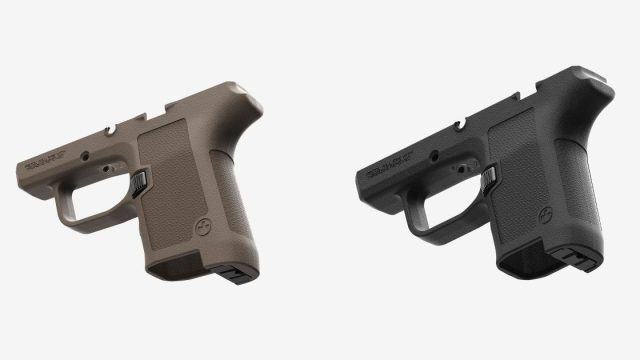
Sorry, Ruger, but the factory grip is an AR grip, not a precision rifle grip. Next to a Boyds stock or a Bergara B14 you can see the difference in angle right away. An AR grip is made for grabbing and maneuvering the gun. On a precision rifle you want to relax, rest your fingertips, keep your thumb on the left side so you’re not putting torque (or your heartbeat) into the gun, and get your trigger finger to about a 90 degree angle every time.
The example on the table was Anarchy’s Tuxedo grip, designed by a former 3rd Battalion Ranger, with a shelf to rest your hand on. You can train good form with lots of dry fire, but a grip like this builds it in. Run the bolt, get back on the gun, and your hand lands in the same spot. My own experience: I let people at the range try my rifles with Anarchy’s Penguin grips, and not one person told me it felt bad. Weird at first, then “holy crap, this feels natural.” I think it helps you get the best trigger pull out of even a mediocre stock trigger.
2. The muzzle brake
The factory brake looks great. Aaron’s take is that its function is not: it cuts some recoil but doesn’t help much with barrel flip. He’d either shoot the rifle suppressed or swap the brake for something like an Area 419 or APA brake. Brake design is a whole video on its own.
3. Bolt handle and knob (the happy accident)
This is my favorite story from the visit. Anarchy designed its bolt handle for the Ruger American, because the factory American handle is tiny, with almost no leverage. They changed the angle, made it longer and gave it a more substantial knob. Because the RPR is built on the same action pattern, the handle fits it too, and that’s where they got the surprise.
The factory RPR handle is decent. But the Anarchy handle’s angle keeps it closer to your body, so when you come off the trigger and go up and back, your hand travels less. Side by side you could see it. That was an unforeseen perk. The knobs thread on as 5/16×24, so you can pick fluted, dragon scale and lots of other styles.
4. The trigger
The stock trigger isn’t bad, but it can be better, and plenty of people can’t stand bladed triggers. For a long time the RPR aftermarket trigger list was really short, with Timney as the well-known option. Then the Ruger Custom Shop RPR came out with a TriggerTech trigger, which surprised everyone, since nobody knew TriggerTech made one for the RPR.
At the time of filming, the .223/5.56 Custom Shop rifle had the TriggerTech Special flat face with about 100 rounds through it, and Aaron called it phenomenal. Another rifle that used to run a Timney two-stage had a beta TriggerTech Diamond flat face swapped in for testing. That beta design wasn’t compatible with certain RPRs yet, and TriggerTech was working on the fitment, with Anarchy helping since they had every caliber on the table. That was the situation in December 2021, so check what’s actually available today.
5. A cheek pad
A simple one. Anarchy makes foam cheek pads that are softer and handle sweat. Aaron told a story about hunting in Texas with a buddy’s rifle and having sweat running off his face onto the stock. They’d added cheek pads to all of their factory-stock RPRs. The new one was just too new to have one yet.
The nice-to-haves
- Flat bottom and Arca rail. Aaron shoots off barricades, cars and bipods, and wants full surface contact. An Arca rail also lets your bipod travel and lets you clip into a tripod. A friend of his cleaned a stage at a match by setting up a tripod inside the shooting box. I think tripod shooting is going to keep growing, and it’s great for teaching kids too, because you can control where a six-year-old is pointed while he stands.
- Magazine release. Two options: a Catalyst Arms release you push straight forward, and Anarchy’s own polymer release that sits much closer to the magazine, so you can come off the trigger and go straight down. It’s a small movement, but it matters when you have to drop a mag for a malfunction.
- Scope base. The stock 20 MOA base is the old standard. Aaron runs 30 MOA bases on almost everything now (one rifle on the table had 40 MOA on a .223) because newer scopes have the internal elevation to still zero at 100 yards. Just check that your scope can do it.
- Bolt shroud. Some people swap it because the stock one wiggles a little or they want the titanium look, which is a non-functional reason. Aaron competes with a solid titanium shroud because more mass behind that big bolt runs cleaner.
- Adjustable bag rider. One rifle had an adjustable bag rider that cants left and right and can roll down for weird PRS positions. It also added a little length of pull.
The stock: leave it?
Lots of taller shooters complain about the RPR buttstock. I’m vertically challenged, so it fits me fine. Aaron likes it too, other than the small grommet holders, which are easy to bend and snap if you don’t know how they work. Our take was that Ruger could change it and please maybe a quarter of buyers while driving up the price, or you can change it yourself. It’s a decent stock and it won’t hold you back. Anarchy hadn’t changed the stock on any of its factory RPRs.
The 6.5 PRC model
We finished with the 6.5 PRC RPR, which already came with a flat bottom and an Arca handguard. It’s a bit of a unicorn: not a magnum, but it doesn’t really fit Ruger’s short action either. It uses a standard AICS-pattern mag well, and the magazines take no binder plate at the front. Aaron wished that latest handguard came on every RPR. Yes, that means fewer aftermarket Arca rails for him to sell, but it should have come out of the box.
My take
Looking at that Gen 1 next to a brand-new rifle, the RPR has clearly grown up. The handguard, shroud and firing pin concerns from 2015 were addressed. What’s left are mostly fit-and-feel choices, and that’s the point: the factory RPR is accurate enough, and the upgrades help the shooter be consistent. If I had to pick an order, it’s grip, trigger, bolt handle and knob, muzzle brake, then a cheek pad. This was filmed in December 2021, so check current part compatibility before you buy.
More RPR reading on the site:
- Best Ruger Precision Rifle Upgrades
- Ruger Custom Shop Precision Rifle Launch Deep Dive: Every Change vs. a Stock RPR
- Is the Ruger Custom Shop Precision Rifle Match Ready?
- Ruger Precision Rimfire Upgrade Path With Anarchy Outdoors
Gear and support
- Anarchy Outdoors grips, bolt handles, knobs, Arca rails and cheek pads: Anarchy Outdoors (use code SlavGuns)
- Everything else I run: SlavGuns Amazon storefront
- Support the channel: join the Squat Squad on YouTube
What did you change first on your RPR? Tell me in the comments. Thanks for reading, and keep squatting!
Some links are affiliates.
Comments